
Work order management
A process the field follows produces data you can use
Most work order implementations do not fail at selection. They fail at adoption, and the symptom is not an empty system. It is a full one, filled in on Fridays from memory, producing reports that describe data entry rather than the estate.
- Capture at the point of work
- SLA measured from the record
- Evidence attached by default
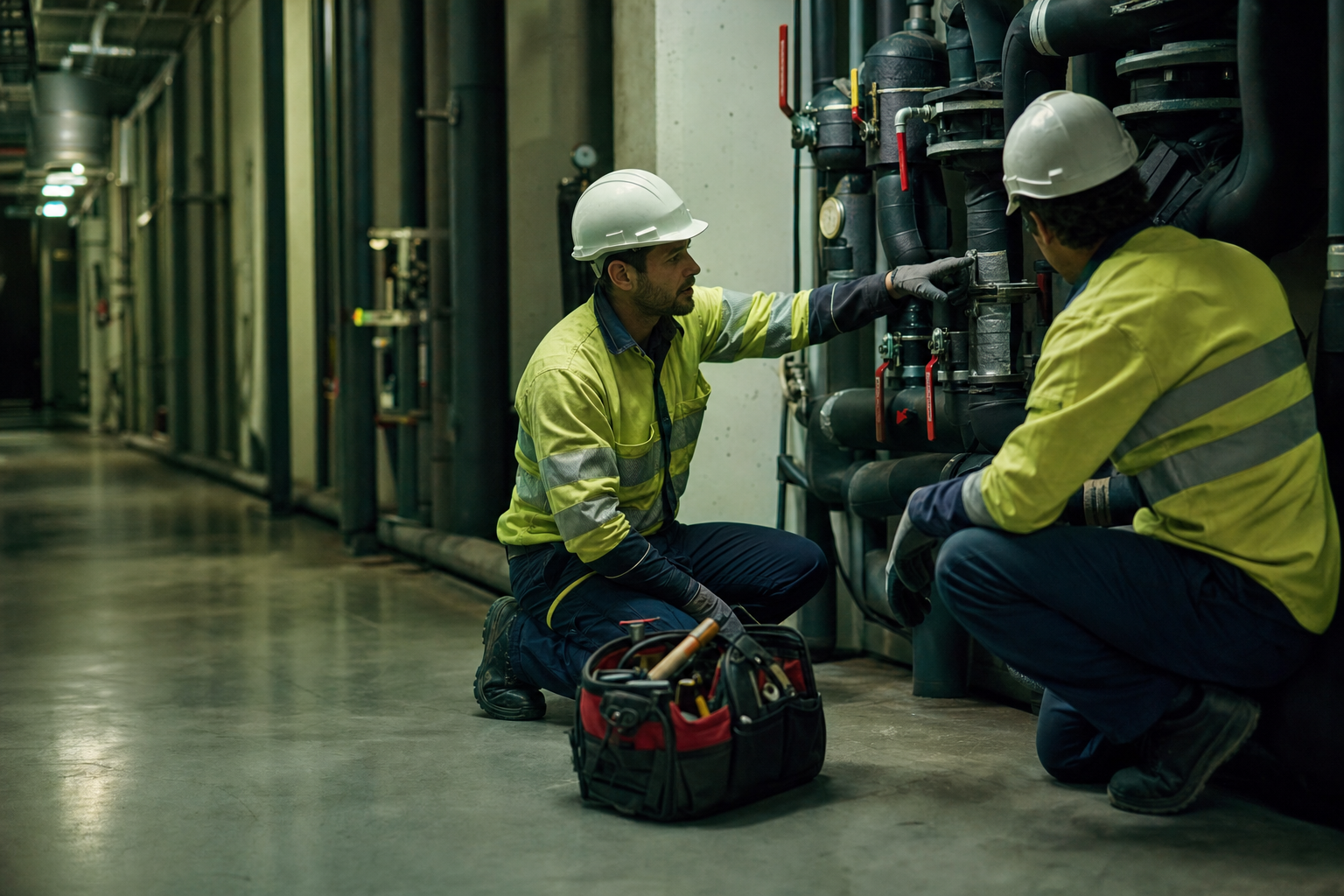
The adoption problem
Every field you add costs you a technician
A work order system is specified by the person who reads the reports and used by the person doing the job, and those two want opposite things. The reader wants categories and cause codes. The technician wants to finish and move on. Charge enough of that tax and the data quietly becomes fiction.
- Capture happens as part of the procedure rather than as a form afterwards
- Evidence is required at the step that needs it, not collected at the end
- Work completes with no connectivity, which is where most of it happens
- A technician can decline work with a reason, so honesty is the cheaper option
The flow
Four stages, and the data each one produces
- 1
Raised
By an occupant, a colleague, a schedule or a failed inspection. Timestamped, which is where SLA measurement starts.
- 2
Assigned
To an individual, a team or a vendor, with a time or a deadline. Committed capacity becomes visible.
- 3
Performed
Guided steps at the asset, with evidence and readings captured, and deficiencies raised in passing.
- 4
Closed
With the record complete and the reporter notified, which removes most repeat reporting.
What good looks like
Properties of a process that survives two years
- Anybody in the building can raise work without an account
- Duplicate reports merge instead of multiplying
- A technician can decline work with a reason and a photograph
- Late work reports how late it is, not merely that it is late
- Blocked work is visible on the day it blocks
- The person who reported it is told when it closes
- Completed work carries its own evidence without being asked
- The whole record is retrievable a year later, by site and date
Questions people ask
- How is this different from a service desk or ticketing system?
- A ticketing system records the conversation about work. This records the work: the procedure, the evidence, the readings and the time, captured at the asset. That difference is what makes the reporting defensible.
- Can we migrate open work orders from our current system?
- Yes, from an export or a spreadsheet, as part of the rollout. Open work moves first so nothing is lost at cutover.
- What does adoption actually look like in the first month?
- Start with one programme rather than the whole estate, and give it to the crews most likely to complain. They surface the real problems inside a week, and if it survives them it survives everybody.
Keep reading
- Smart Work OrdersA work order is the unit your budget, your SLA reporting and your audit trail are all built from.Open
- RequestsRequests arrive by email, by text, at a service desk and in a corridor.Open
- Scheduling and DispatchMost maintenance schedules are built on estimates nobody has checked, which is why they are fiction by Wednesday and ...Open
Ready to see DFM in action?
Book a demo and see the platform running against a building like yours.