
Equipment inspections
A reading is only useful next to the last one
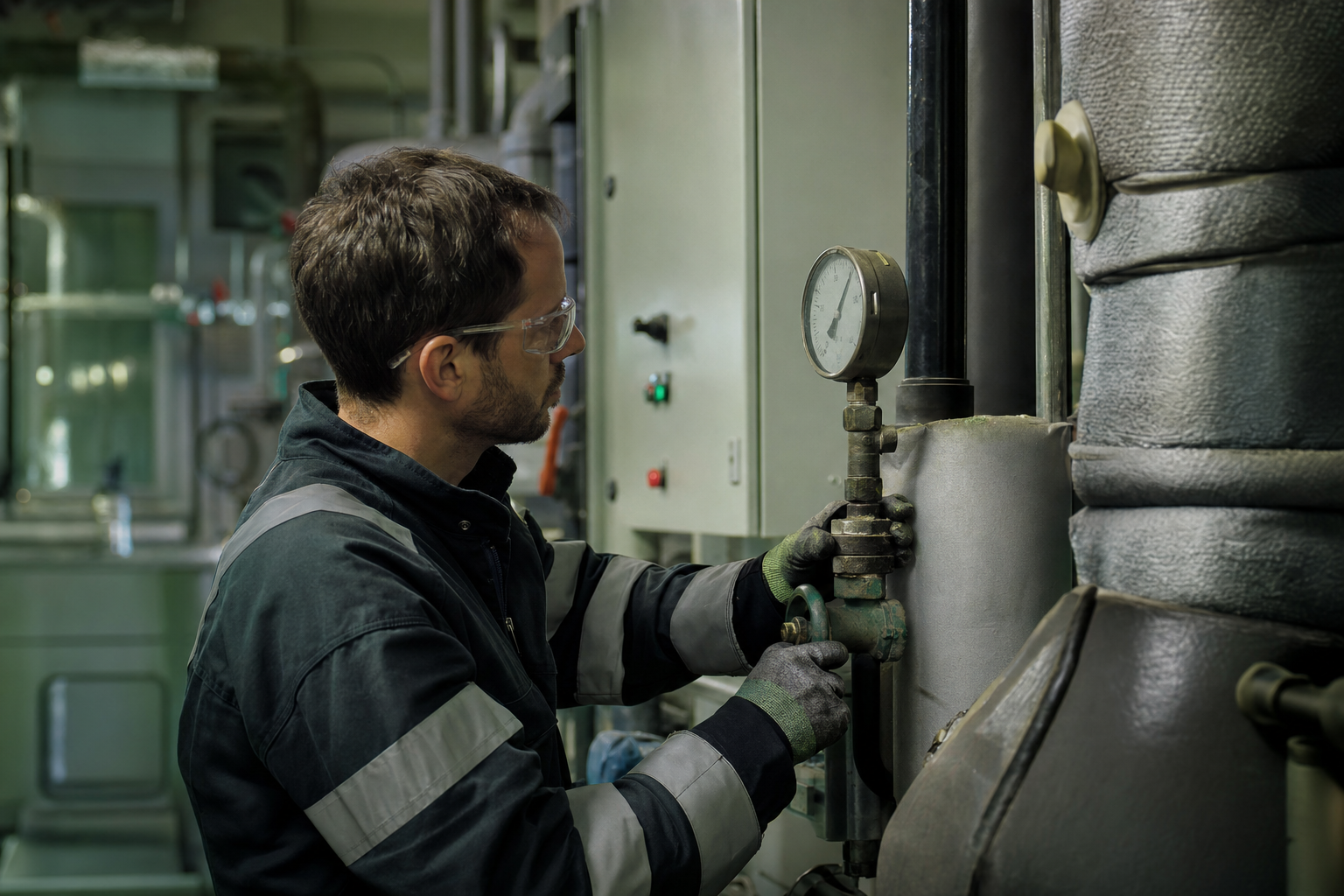
Most equipment inspection captures a number and files it. The value is in the sequence: the pressure that has been drifting for three quarters is a planned repair, and the same pressure discovered at failure is a shutdown.
- Scan opens the correct asset
- Readings stored as data
- Thresholds raise work automatically
Starting the job
The tag opens the right record every time
A technician scans the tag on the unit and gets that unit: its procedure, its last inspection, its readings and its open deficiencies. No searching an asset list, no filing against a similar unit two rooms away, and no dependence on anybody remembering an equipment numbering scheme.
- The scan is also the evidence of attendance
- Documentation and manuals available on the record, in front of the unit
- Open deficiencies shown before the inspection starts
- Work cannot be recorded against the wrong asset
Capture
The four things worth recording every visit
Readings
Pressures, temperatures, hours run and cycle counts, stored as numbers with thresholds and trended per asset.
Condition checks
Pass or fail, with a failure raising tracked corrective work rather than a note somebody may act on.
Photographic evidence
The nameplate, the leak, the gauge, filed against the step that required it.
What was done
Parts changed, adjustments made, and what the next person needs to know before they open the panel.
Assets
The plant that carries a building
- Air handling units and fan coils
- Chillers and cooling towers
- Boilers and steam plant
- Generators and transfer switches
- Fire pumps and sprinkler risers
- Elevators and escalators
- Pumps, motors and variable speed drives
- Electrical panels and switchgear
- Backflow preventers
- Compressed air systems
- Refrigeration and cold rooms
- Roof mounted plant
Questions people ask
- What if an asset has no tag yet?
- It can be selected from a list until a tag is applied. Tagging normally follows the first programme rather than blocking it.
- Can we see readings over time?
- Yes. A metered step stores the value as a number, so it can be trended against the asset and compared with the threshold that raises work.
- Can thresholds trigger corrective work automatically?
- Yes. An out-of-range reading can raise a deficiency and notify the responsible person at the moment it is recorded.
Keep reading
- Assets and EquipmentRepair or replace is the most expensive recurring judgement a facility team makes, and in most estates it is made fro...Open
- Preventive MaintenanceEvery facility team has a preventive maintenance schedule.Open
- ManufacturingIn a plant, the cost of a maintenance failure is not the repair.Open
Ready to see DFM in action?
Book a demo and see the platform running against a building like yours.