
Education
The backlog is the number the board actually asks about
Campus facilities are judged on two things: whether the buildings work during term, and whether the deferred maintenance backlog is under control. The second is decided by whether anybody can produce condition data when the capital conversation happens.
- Condition data per building
- Summer programme tracked to deadline
- Procedures any seasonal worker can run
Why the backlog compounds
Deferral is a decision with a rate of interest
A backlog is invisible until it is a capital request. These are the reference points a facilities director is arguing against in front of a board.
- Below 0.05
- Facility Condition Index of a well-maintained estate
- Above 0.10
- Facility Condition Index signalling an urgent capital need
- 3 to 5%
- Annual compounding of deferred maintenance backlog in weaker operations
- 3 to 5x
- Cost of a reactive repair against the same work planned
Figures are published industry benchmarks from IFMA and BOMA operating-cost surveys, not DFM customer results.
The operating problem
What campus teams are up against
The year is not flat
Ten weeks of concentrated summer work, then nine months of keeping it alive with a fraction of the capacity.
Seasonal and casual labour
A procedure that assumes experience will not be executed correctly in July by somebody hired in June.
Mixed-age estate
A 1930s boiler house next to a building handed over last year, with completely different failure profiles and evidence expectations.
The occupants are children
Playgrounds, laboratories, kitchens and pools each carry their own statutory regime and their own inspection record.
Capital planning by anecdote
Which roof gets funded is argued from the loudest recent failure rather than from condition data.
Somebody will ask
A board, a state inspector, an insurer or a parent, and the answer has to exist before the question does.
The summer programme
A hundred jobs, ten weeks, one list
Summer is the one period where work by deadline beats work by appointment. Issue the list, watch what remains by building, and know at the start of August whether the estate is going to be ready, while there is still time to move labour or bring in contractors.
- Work assigned by deadline rather than by hour
- A live count of what remains, by building and by trade
- Before and after evidence captured for the board pack
- Contractors on the same list and the same record as your own crews
Programmes
What a school or campus inspects
- Daily building opening and security rounds
- Playground equipment inspections
- Fire drill, alarm and suppression testing records
- Emergency lighting and egress route checks
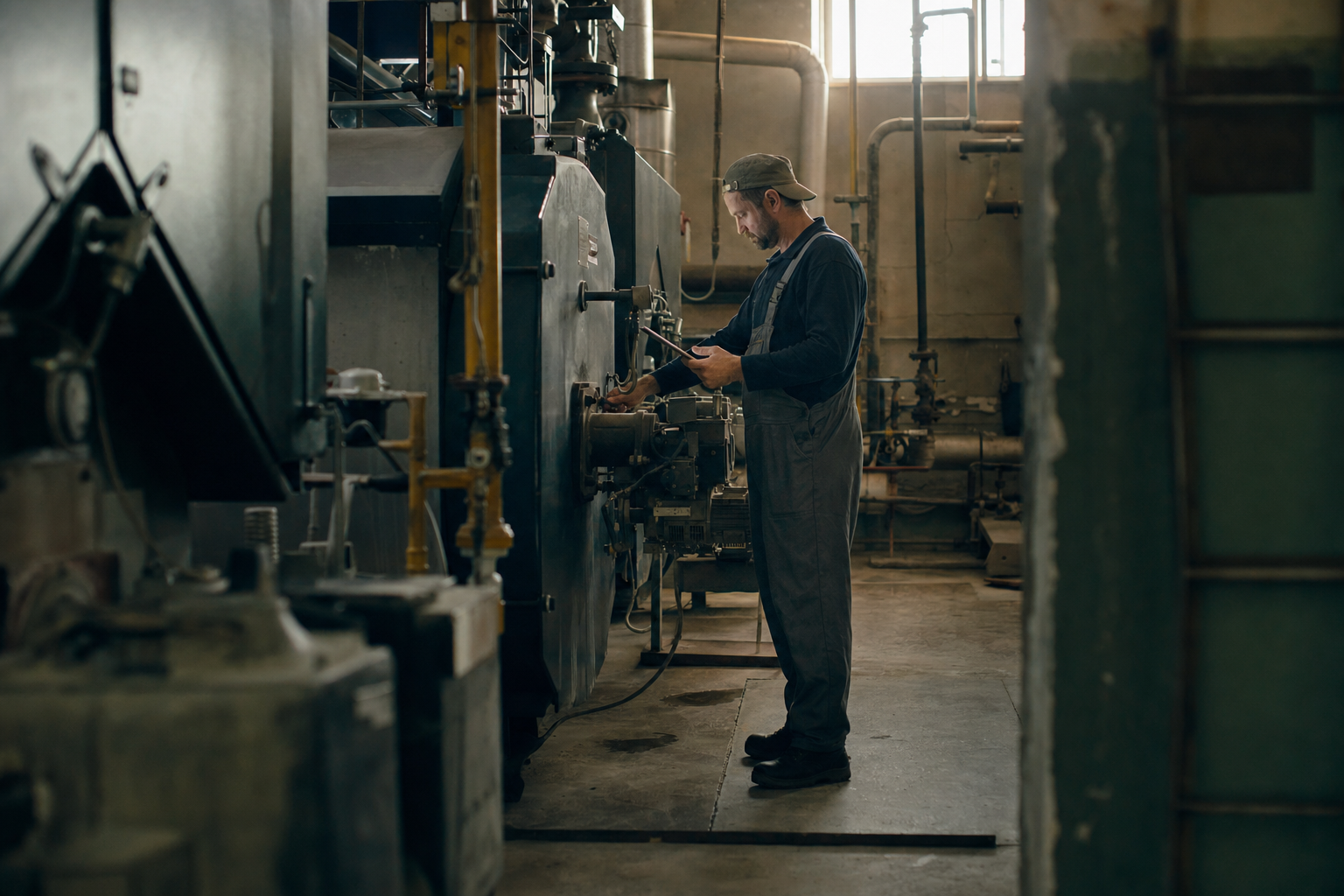
- Boiler and heating plant rounds
- Kitchen and food safety checks
- Laboratory safety equipment inspections
- Pool plant and water quality logging
- Legionella and water system controls
- Grounds, path and winter safety rounds
- Classroom and residence condition surveys
- Summer turnover and handover inspections
Questions people ask
- Can seasonal staff use it without training?
- Yes. Procedures present one step at a time in the language the person reads, and a job can be started by scanning the tag on the room, so nothing depends on knowing an asset numbering scheme.
- Can we produce condition data per building for capital planning?
- Yes. Work, deficiencies and condition readings all file against the building and the asset, and export through the API into whatever renewal model your finance office uses.
- Does this work across a district or a multi-campus institution?
- Yes. Procedures publish across the estate and reporting rolls up by campus, region or the whole institution.
Keep reading
- Preventive MaintenanceEvery facility team has a preventive maintenance schedule.Open
- Facility InspectionsA completed paper inspection proves that a form was filled in.Open
- Assets and EquipmentRepair or replace is the most expensive recurring judgement a facility team makes, and in most estates it is made fro...Open
Ready to see DFM in action?
Book a demo and see the platform running against a building like yours.