
Guide
Preventive maintenance that does not slip
June 9, 2026 · 8 minute read
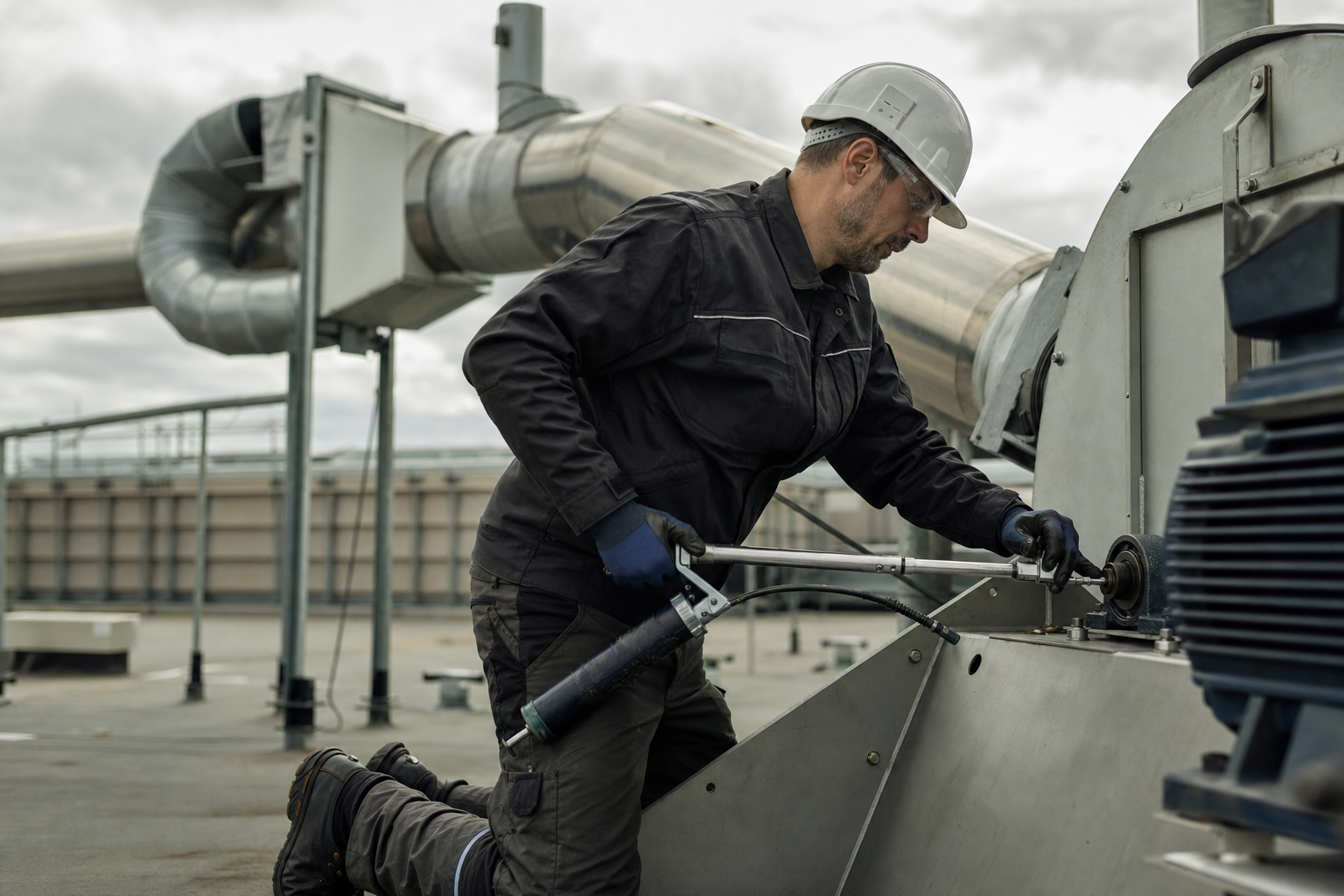
Every facility team has a preventive maintenance schedule. Most of them are behind. The reason is structural, not moral: a broken thing is loud and a thing that is going to break is silent, so the loud one wins every week.
Make the slip visible
The change that does most is making late preventive work a number somebody sees daily. Not a report that gets run quarterly. A count, on the screen people open in the morning, that says how many scheduled jobs are past their date and at which buildings.
This works because it converts a vague unease into a specific number that somebody can be accountable for. Vague unease loses arguments about resourcing. A number does not.
Build the plan on real durations
Most PM plans are built from guesses about how long jobs take, which is why they are fiction by Wednesday. Once you are recording runs, use the middle of the range rather than the average: one bad afternoon should not move the plan, and the average is dragged around by exactly those outliers.
Spread the load properly
A schedule that always assigns to the same person creates a single point of failure and a resentment problem. Drawing from a pool spreads both the work and the knowledge, and it means the round survives somebody leaving.
Escalate to somebody who can act
An alert that goes to the person who already knows the job is late achieves nothing. Escalation has to reach somebody with the ability to move resources, and it has to say what specifically is late and where.
Prune the schedule once a year
Most PM schedules accumulate. Somebody added a quarterly check for a machine that was removed in 2019. Reviewing the schedule against the actual asset register once a year usually removes enough work to make the rest achievable.
- Remove work for equipment that no longer exists
- Merge rounds that visit the same plant room twice
- Move anything that has passed forty times in a row to a longer interval
- Shorten the interval on anything that has failed twice