
Compliance
Forklift inspections before every shift
January 30, 2026 · 7 minute read
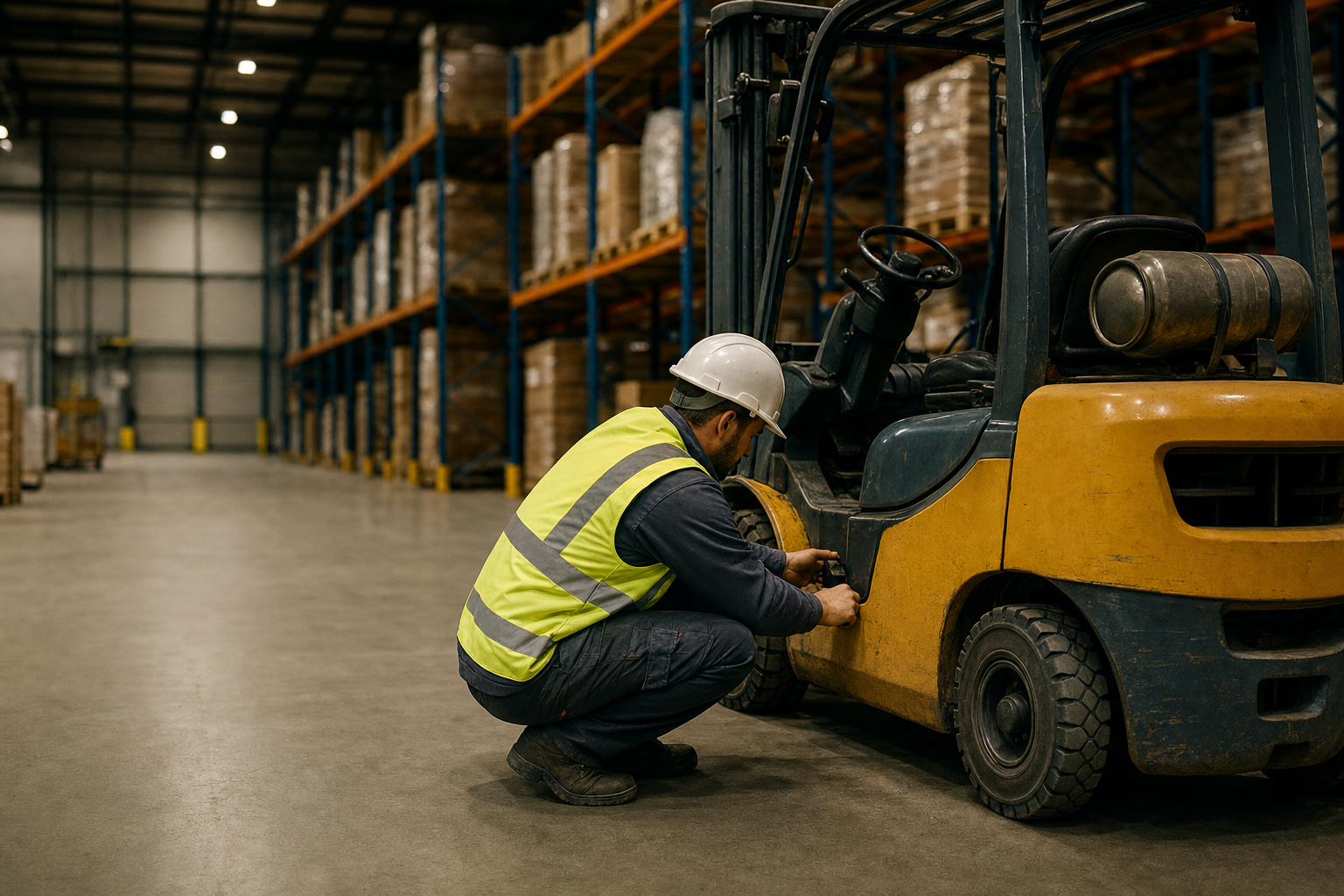
In the United States, 29 CFR 1910.178 requires powered industrial trucks to be examined before being placed in service, at least daily, and after each shift where trucks are used around the clock. Any truck found to be in unsafe condition must be taken out of service until it has been restored.
The pre-use check, engine off
- Fluid levels: oil, hydraulic, coolant, and battery electrolyte where applicable
- Leaks under and around the truck
- Tyres and wheels: condition, damage, pressure where pneumatic
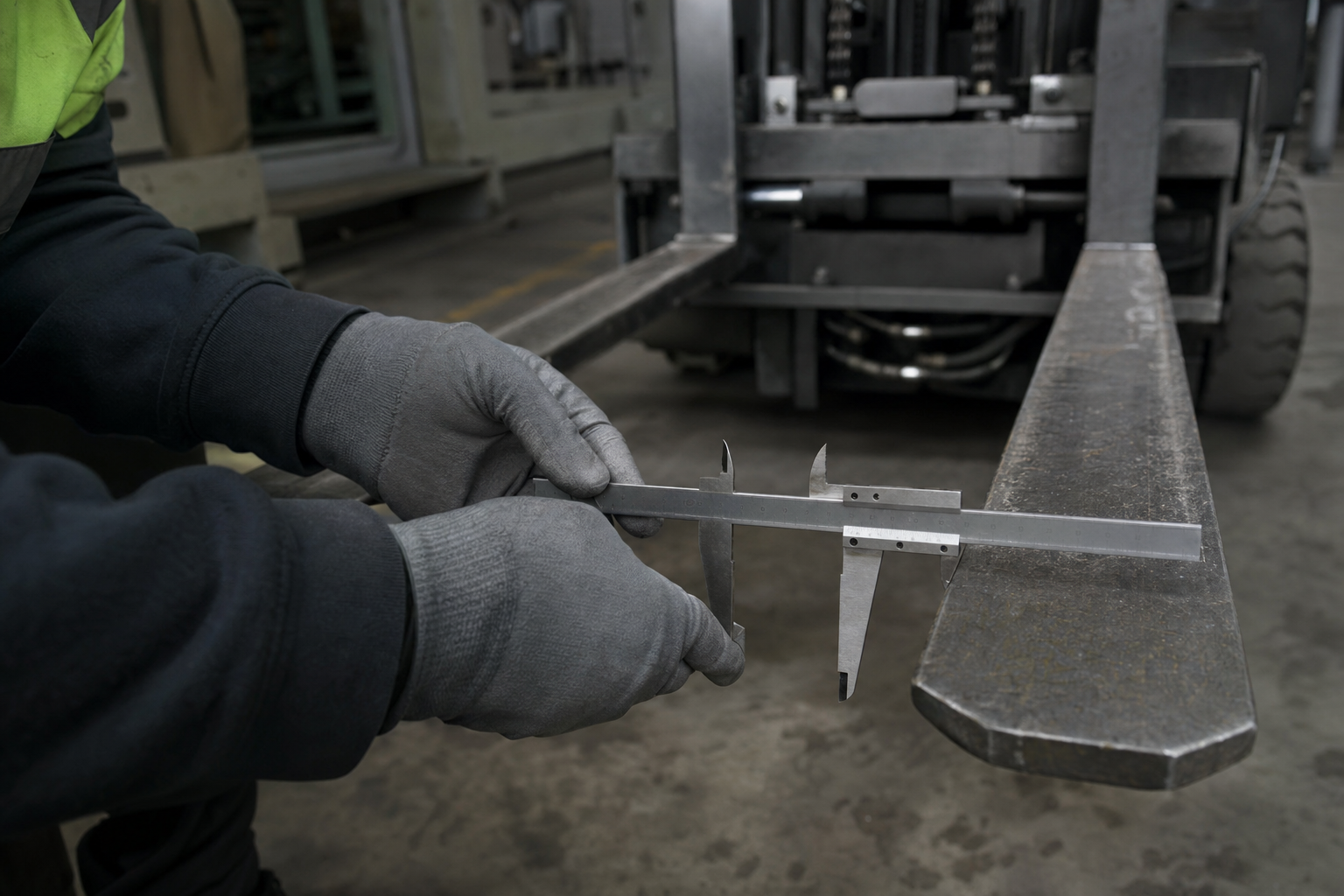
- Forks: no cracks, no bends, heel wear within limits, locking pins present
- Mast, chains and hoses: no damage, chains evenly tensioned and lubricated
- Overhead guard and load backrest secure and undamaged
- Seat belt, seat and operator restraint
- Data plate legible, and any attachment shown on it
- Battery or fuel system secure, connectors and cables undamaged
The check with the engine running
- Service brake and parking brake
- Steering, including full lock both ways
- Horn, lights and reversing alarm
- Lift, lower, tilt and any attachment, through their full travel
- Gauges and warning lights
- Unusual noises, and hydraulic drift with a load held
The two failures that matter most
Fork damage and mast chain wear. Both are gradual, both are easy to walk past, and both fail in ways that drop a load. Measuring heel wear and chain elongation properly, rather than looking at them, is the difference between an inspection and a glance.
Stop it being a signature
A pad of forms on a clipboard by the charger gets signed in batches at the start of the week. Three changes prevent that.
- The check is completed on a phone at the truck, with a code scanned on the truck itself
- At least one photograph is required, which cannot be taken from the office
- A reported defect becomes tracked work immediately, and the operator sees that it did

Out of service has to mean out of service
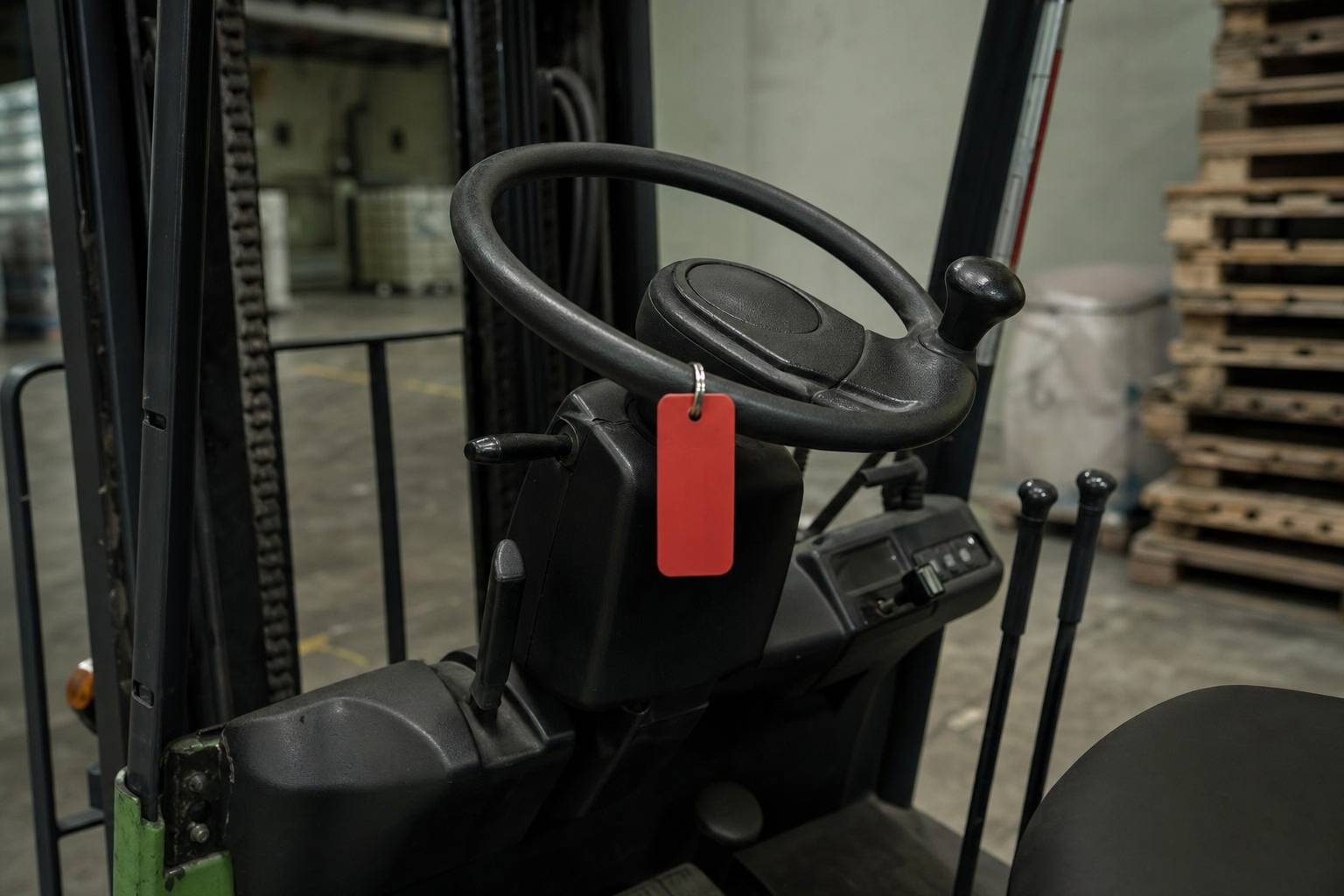
A truck with a reported defect that affects safe operation cannot keep working while the repair is scheduled. That requires a physical control, usually a key removed and a tag applied, plus a record. A defect logged into a system while the truck keeps running is worse than no system, because now the decision is documented.
Watch the shift with no defects
Across a fleet of trucks, defects appear at a steady rate. A truck or a shift reporting nothing for months is not looking. This is visible in seconds once the checks are recorded and invisible on paper.
This describes the United States rule. Other countries require an equivalent daily check under their own regulations.